
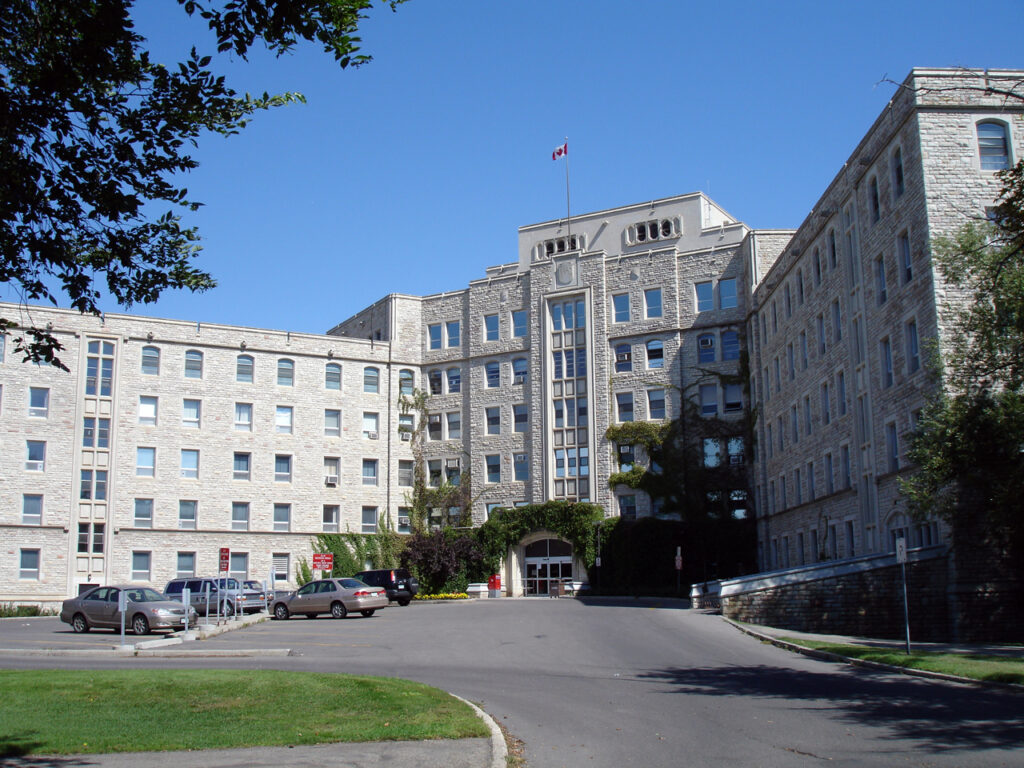
SASKATOON — For dozens of Saskatchewan cancer patients, the fight for their lives is currently stalled not by their biology, but by a 12-year-old machine and a supply chain failure.
As of Friday, January 9, 2026, the province’s only PET/CT scanner, located at Royal University Hospital (RUH), continues to operate at just 50% capacity. This prolonged service disruption has triggered a wave of cancellations, leaving patients in a “terrifying” limbo as they wait for the scans required to stage their cancers and begin life-saving treatment.
The Tracer Trap
The crisis originated on December 23, 2025, when an “unexpected production issue” occurred at the Sylvia Fedoruk Canadian Centre for Nuclear Innovation in Saskatoon. The facility’s cyclotron failed to produce fludeoxyglucose (FDG), the radioactive tracer that patients must be injected with before a scan can visualize cancerous clusters.
Because FDG has a half-life of only 110 minutes, it cannot be stockpiled. When the Fedoruk Centre went dark, so did the provincial diagnostic program.
“We are essentially running a marathon with one leg,” said one nuclear medicine technologist at RUH, speaking on the condition of anonymity. “We secured a temporary supply from Ontario on December 29, but the logistics of flying isotopes across three provinces means we can only treat half the patients we used to.”
“It Is Irresponsible”
The technical failure resulted in the immediate cancellation of 51 appointments just before Christmas. Since then, the backlog has snowballed.
Erin Neufeld, whose 76-year-old father is battling lung cancer, joined a chorus of frustrated families at a news conference this week. Her father’s scan—vital to determining if his cancer has spread—was cancelled with no firm date for rescheduling.
“To have only one unreliable machine for an entire province of people is beyond irresponsible,” Neufeld told reporters. “Every day that he doesn’t get his treatment started is one less day I may get with him. I’m not satisfied with that.”
The Political Fallout
The Saskatchewan NDP has seized on the crisis, releasing internal government correspondence from 2017 to 2019 that suggests the PET/CT service has been plagued by closures for nearly a decade due to mechanical aging and “chronic staffing shortages.”
“This should have been anticipated,” said Keith Jorgenson, NDP Associate Health Critic. “Right now, people with cancer are waiting months for scans. This isn’t a ‘hiccup’—it’s a systemic failure.”

The Saskatchewan Health Authority (SHA) pushed back against claims of negligence, stating that the current disruption is purely a tracer supply issue and not related to the machine’s age or staff levels. However, the SHA confirmed that replacement of the RUH scanner is now being considered for the 2026/27 fiscal year budget.
Where is the Backup?
The crisis has renewed questions about the province’s reliance on a single point of failure. While the government announced a second PET/CT scanner for Regina’s Pasqua Hospital in 2024, that project remains in the “design and estimate” phase. It is not expected to be operational until late 2027 at the earliest.
For patients like Neufeld’s father, that is a timeline they simply cannot afford.

